Page 2 of 2
Pittsburgh, Pennsylvania
Sometimes breathing the same air has got to be enough
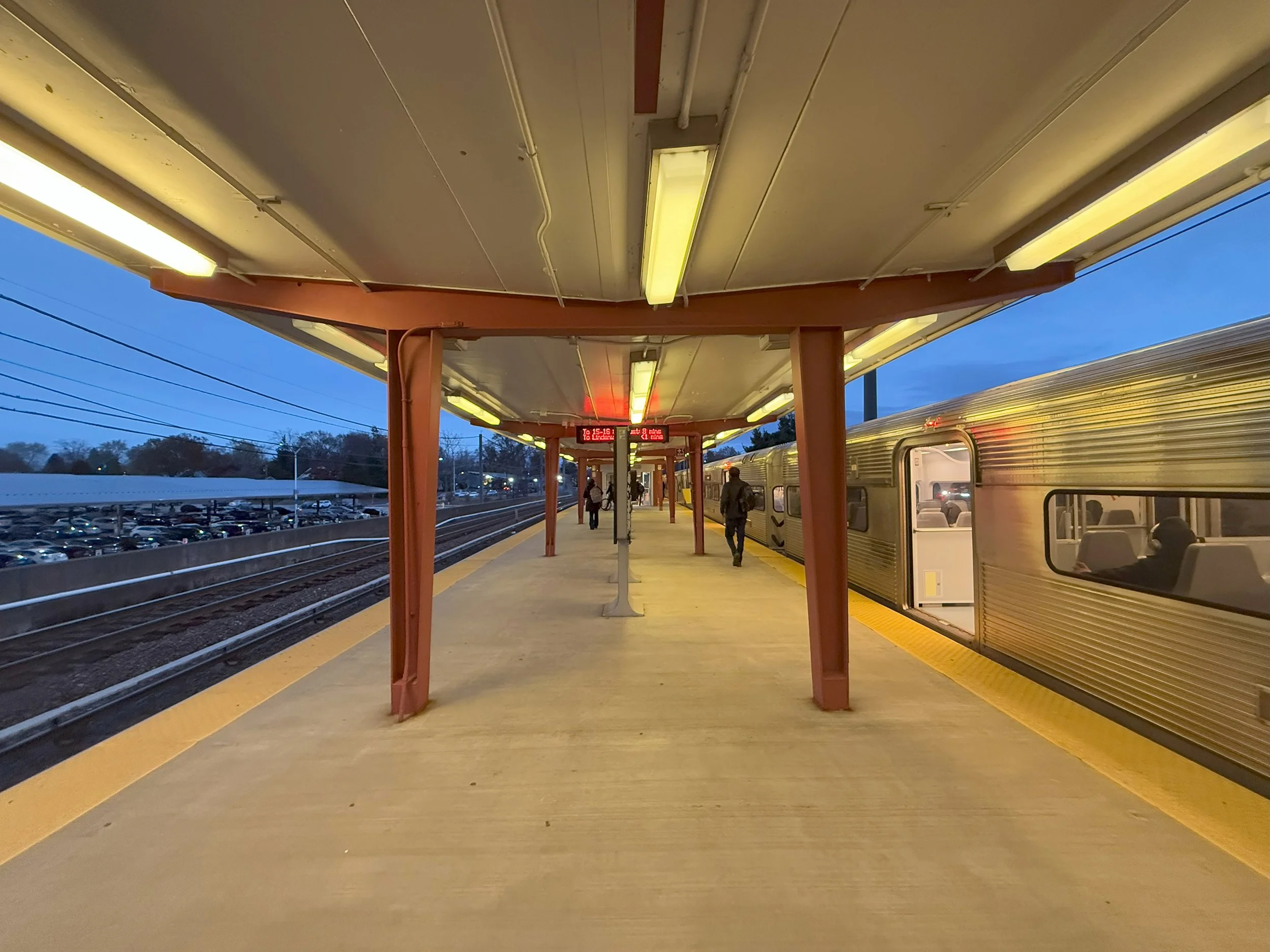
I wasn’t really in Pittsburgh all that long, but already on the last page we visited four museums (five if you count the Carnegie twice), an observation deck, a national aviary, a memorial to the most beloved man in Pittsburgh and Randyland, as well as attending a damn fun Savannah Bananas game at PNC Park. This page of the slideshow is not as ambitious as that, or to be more accurate, does not at first glance appear to be as ambitious as that. But don’t be fooled- you’ll soon find out there is a lot more to see. We’ll start where I started, right here at the PRT Gateway Station in downtown Pittsburgh.
I looked online for a good walking tour of downtown Pittsburgh and (honestly) could not really find one. But I did take bits and pieces from different tours to give myself some direction and highlights. Complicating things was that it was a national holiday and downtown was hosting its annual Labor Day Parade, closing off all sorts of streets and making a very walkable downtown unusually difficult to navigate.
There are a lot of nice buildings in downtown Pittsburgh but no other building (or plaza I guess) is quite as memorable as PPG Place, a Postmodern Philip Johnson and John Burgee landmark that never fails to impress, even if (or possibly because of) how oppressive it is, a comment which could be seen as negative but in this case it’s a little more nuanced. Perhaps a better way to describe it may be that it’s visually stunning and impressive as to how all-in the design is, but I’m also equally happy that it’s an aberration and that all buildings (or plazas I guess) aren’t like this one.
Everything in Downtown Pittsburgh is close enough to walk, even with that pesky Labor Day Parade closing off a bunch of streets. From downtown all you have to do is walk across the Smithfield Street Bridge to get to the Monongahela Incline and, before you know it, you’re already high above the city on Mount Washington.
Just like everything else in Pittsburgh, walking between the top stations of the two funiculars is closer than you think, although once you’re up on the mountain you quickly start to realize that Grandview Avenue isn’t quite as level as you initially thought.
Still, despite the ups and downs, it’s not too long before a much bigger down, riding the Duquesne Incline right back down to the riverbank.
The all walking all the time tour of Pittsburgh continues with a walk along the river that took me right back over the fun to say (but hard to spell) Monongahela on the Fort Pitt Bridge’s narrow (but useful) pedestrian path. Before I knew it I was already back in the Golden Triangle and at the Fort Pitt Museum and Point State Park, which still had awesome views despite the fact that I was there (once again) during a time when the great big fountain at the start of the Ohio River (not pictured) was closed for maintenance.
If you drew a map of my pieced together walking tour of Pittsburgh, it might look as if I was crazy or lost, and neither were (completely) the case. After Point State Park, I headed through the Cultural District on my way to the Heinz History Museum, following an irregular path that still took me by building after building, including ones that were expected and others completely unexpected.
One of the reasons my pieced together walking tour was so crazy was that I went out of my way to make sure to stop here at Daniel Burnham’s jaw dropping Penn Station, or at least the part of it that’s still public. The next time that you’re in Pittsburgh, take the walk over to Liberty and Grant and stand right here under the dome and try not to be impressed. I dare you.
If I ended up taking the painfully slow Amtrak Pennsylvanian to Pittsburgh (my original plan as you may recall), I may have enjoyed the travel more (driving is rarely my first choice) but I would have missed this, the Palmer Museum of Art by Allied Works on the Penn State campus. It had a few good things going for it that made it very appealing for a road trip stop. First off it is located (just about) halfway between me and Pittsburgh and was just practically a great place to get out of the car. Second it was a (still) new, nice shiny building with a good, free to visit collection. And finally it was only a short walk from Penn State’s very own Berkey Creamery, an always busy ice cream shop, where the ice cream was in fact good enough to justify all of those other people there who also thought it was a good idea to grab some ice cream at 11 in the morning.
On my drive to Pittsburgh I stopped at Penn State, but on my way home I went a little farther south specifically to stop here at the Flight 93 Memorial, the site where the fourth hijacked plane on 9/11 crashed.
The Flight 93 site is pretty damn big, and the experience starts first with a long road that takes you to a parking lot and the visitors center, which sits on a ridge overlooking the site. Dark pavers on the ground mark the route of the plane and lead to a far away view of the crash site, which is easy to find but only if you know where it is.
From that overlook, you could drive or walk to the memorial, and if you know me at all, you already know which one I picked. It was an easy downhill walk, and once you got to the bottom of the hill you had a view of a wall of names and an open field with a lone boulder that marked the actual crash site. I initially thought that the design (by Paul Murdoch and Nelson Byrd Woltz) was, to be honest, kind of unfocused and unnecessarily complicated, a problem that a lot of memorials face since they’re often under so much pressure to please so many constituents. But once I was there I started to appreciate it more, and the distant (and kind of hard to spot) rock was way more effective than I expected it to be, even if most of the other visitors around me seemed unsure what they were looking at.
The memorial and visitors center are located at one edge of a giant open field that is dominated by a huge circle, a landmark designed to be seen from planes above flying high over fly over country. I decided to take the long way back counter clockwise up the hill and I’m glad I did. The memorial works well as a procession- visitors center overlook then walk to the memorial and crash site then long walk back. I only saw a few other people besides me who thought this procession was a good idea, most seemed to drive or re-walk the same shorter path back. But they all ended up missing out on really understanding it, really experiencing the landscape and really experience the whole intention of the memorial.
The last piece of the Flight 93 Memorial experience was my least favorite part. A tower of wind chimes called the Tower of Voices is located close to the entry road, making it the first (or in my case the last) thing to see on site. My problem is not the idea or the design, but the fact that the chimes needed a strong wind to make any sound, and even on a pretty breezy day the winds did not meet the chime required threshold. That seems to be a pretty big hurdle for a monument like this, although I’m sure it’s great on windy days that are so windy that it makes being outside uncomfortable or even otherwise unbearable.
As an alternate on non very windy days (or, apparently, most every day), the National Park Service provided a QR code to a link where you could listen to the chimes. A link that, for me at least, led to a video with no actual working audio. That seems about right when you think about it.
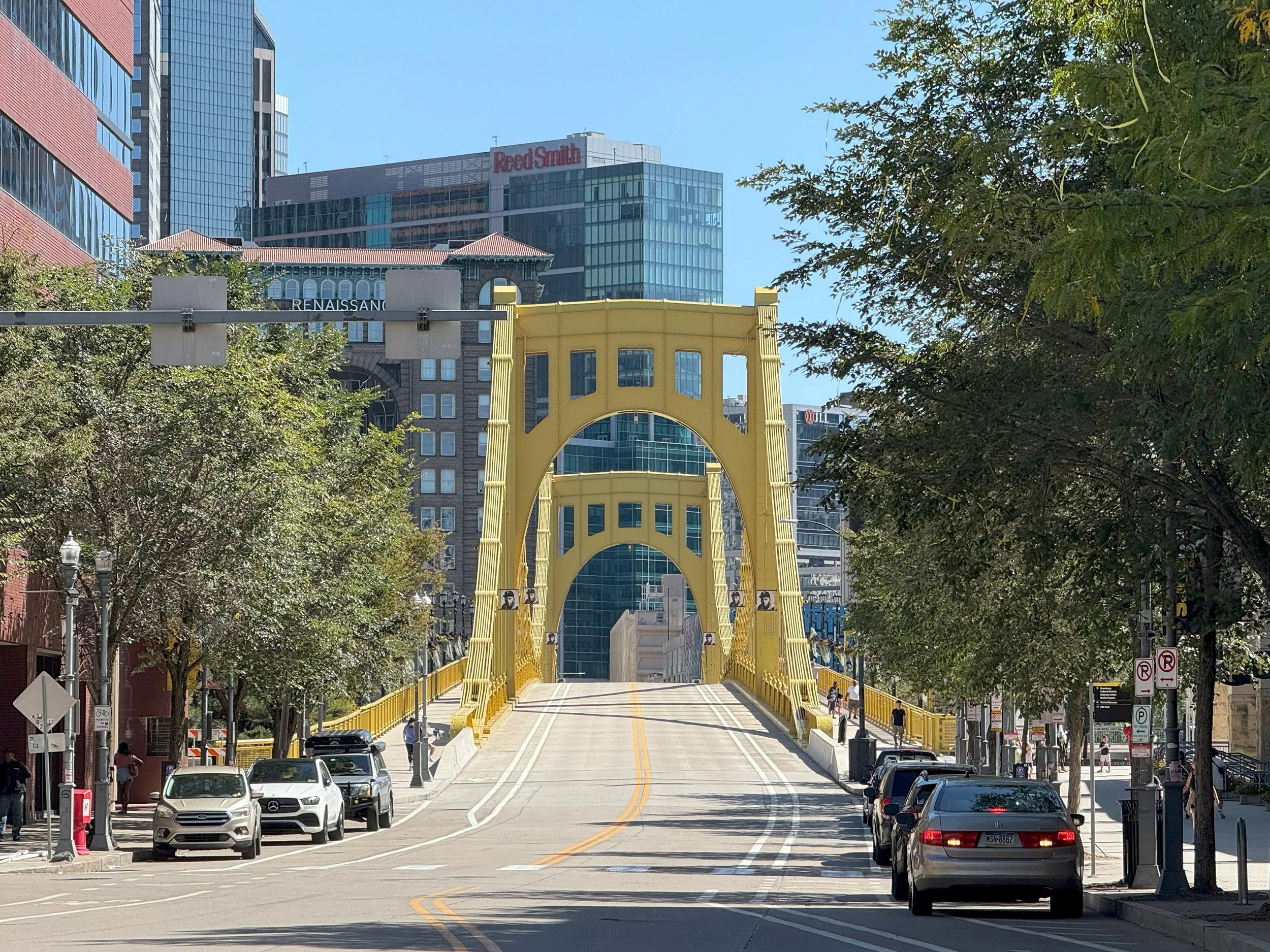
We’re back to Pittsburgh for one last picture, which is where I usually try and sum up what we’ve seen, however in this case I’m not sure I really have to. Careful readers (like you) already know that I think it has an incredibly well sited top tier skyline, that it’s home to one of my all time favorite museums (despite or perhaps because it’s like a funhouse run by insane people) and that it has a walkable downtown with lots of interesting things to see. Perhaps though the best thing about Pittsburgh is that it just feels unique among American cities. This is not a slur against places like Cincinnati or Minneapolis or Denver or Charlotte or Oklahoma City, but really when it comes down to it, there’s no place quite like Pittsburgh. And for me there is no higher compliment than that.