Page 2 of 6
New York, New York
And they’re not strangers, they rarely are
If there was a theme to the last page of this slideshow (and there most certainly was one) it would have been museum buildings that just opened or reopened, and if there is a theme to this page of this slideshow (and there most certainly is one), you should be able to guess what it is soon enough.
We’re deep (ok, not all that deep) underground at New York City Hall at the City Hall Subway Station, an abandoned piece of infrastructure that was once the flagship station of New York’s first subway system when it opened in 1904. The station is on a sharp curve, something which makes it looks dramatic but also something that sealed its fate- modern subway cars need straight platforms and the gaps here (and the fact that it can not serve longer trains) quickly made the station unusable. The station may be abandoned but its tracks are still used as a turnaround for screeching 6 trains making the transition back uptown at the nearby Brooklyn Bridge Station, meaning that you can (technically) stay on a 6 train, look out the window and see the abandoned station anytime you want. However there is only one way to stand on the platforms, take pictures and experience the station for yourself and that’s through a members only tour from the New York Transit Museum. Which explains why I am now a member of the New York Transit Museum.
I set an alarm and made sure to buy my members only New York City Transit Museum City Hall Subway Station tour the minute that they went on sale. Those tickets are surprisingly popular and, even for members like me, they tend to sell out quickly. But no reservations are required to visit the main collection of the New York Transit Museum in Downtown Brooklyn, where you can experience time travel firsthand by walking through subway car after subway car, by reading all of the historically accurate ads, by sitting on those god awful seats and by imagining how much fun it must have been on a packed, non air conditioned subway car with a ceiling fan only inches away from the top of your head.
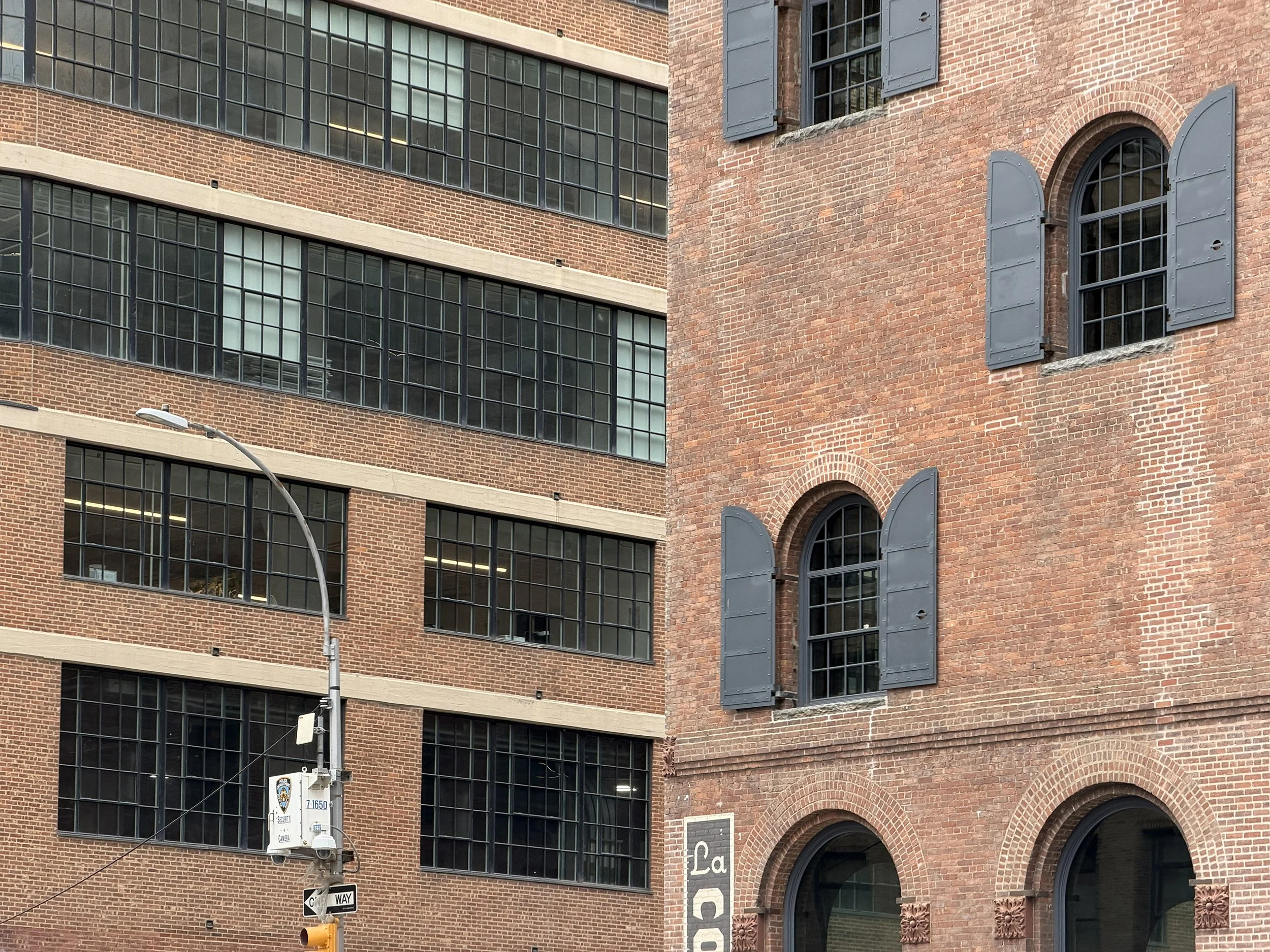
You might be thinking that the theme of this page is trains (I do like trains after all) but you would be wrong. Instead we’ll move on to another tour of a normally closed building as we visit the historic Terminal Stores, a warehouse in West Chelsea (which, according to The New York Times, once was populated with rats the size of footballs) with an addition by COOKFOX. The tour was part of AIA New York’s excellent Archtober program where the project architects led the tour and explained the addition, which was only possible by removing sections of the interior since the building as built is way, way over maximum FAR square footages.
The second of three consecutive Archtober tours takes us to Manhattan West, the skyscrapers (and plaza) located between Moynihan Train Hall and Hudson Yards. The tour took us up to a sales center floor with killer views, views that are arguably better than The Edge at Hudson Yards, primarily since these towers stand right between Hudson Yards and the rest of Midtown.
Like Terminal Stores, the tour was led by the project architect from SOM, and they explained a lot of the design decisions including many that I might otherwise have never even thought of, including that they consider the towers cousins and not twins since New York really isn’t ready for another set of tall twin towers, no matter how different they may be.
The third Archtober tour takes us to SoMA, an office to residential conversion at 25 Water Street in Lower Manhattan by CetraRuddy. Even though the amenity spaces are nice (I did like the design of the bowling alley) and it was interesting to learn about the code issues for this, the largest ever (at the time) office to residential conversion project ever undertaken, the real reason I was there was to enjoy the views.
Our next building tour is a public building, so I guess I could have just gone to see it anytime, but instead I chose to join an Open House New York tour of this, the Davis Center at Central Park. Designed by Susan T Rodriguez and located way up at the north end of the park near the Harlem Meer, the Davis Center is a swimming pool in the summer, an ice skating rink in the winter and just a big open space in the times between. The building (as expected) is exceptionally well designed and was great to visit late on a Spring afternoon with all of the long shadows you could ever hope for. If you’re not (yet) familiar with the Davis Center, you’ll probably appreciate learning that both of these pictures are taken from the same place- with one from inside and one from directly above on the green roof.
We’ll finish up this page inside one last building. This is Wildfair, a mansion in Chester, New Jersey that was the site for this year’s Mansion in May, an event that is generally held every other year to benefit Morristown Memorial Hospital. A $50 ticket buys you a shuttle bus ride and admission to the mansion, where a (usually) convoluted one way path takes you through room after room of “designer showcases,” which historically are a mixed bag of good ones and other ones, and this year was no different. Although after doing this for years I finally realized that booking the last late afternoon ticket possible is the best way to avoid the otherwise slow moving crowds and your best chance to actually enjoy the mansion as it was meant to be.